

Blog · 20 November 2014
How Not to Be an Easy Victim
It's easy to believe nothing bad can ever happen to you. That's not quite true. Here are a few simple tips for your safety and self-confidence — follow them!
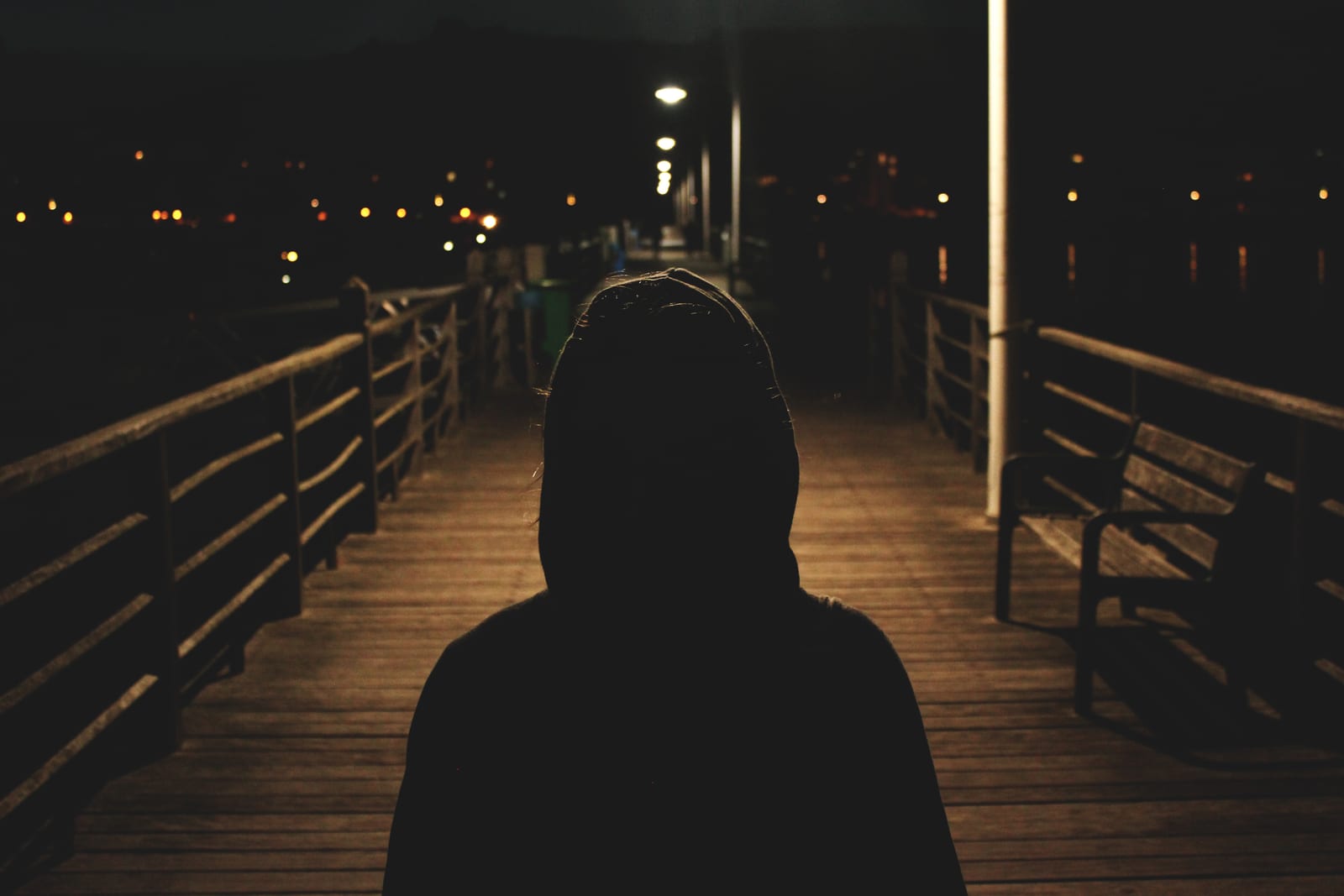
In a society of speed and comfort, it is easy to think that acts of violence are abstract things you only hear about or see on television — and that nothing bad can happen to you. Even if someone you know has been through it, you easily find an explanation: “she was just unlucky”, or “yes, but they caught the thief / attacker”, or “that only happens in certain environments”, or simply “that happens very rarely, what are the chances it happens to me?” Yet the reality is different. Violent events happen, innocent people are attacked and assaulted every day. From thefts to rapes and murders, the victims are always real people — with friends, partners, parents, and children, just like you and me.  And this type of behaviour — denial — is exactly what turns us into victims. We expose ourselves daily to unnecessary risks: some we don’t even notice, and others we simply ignore. There are many things we can do to be safer, and most of them require minimal effort. Here follows an analysis prompted by the murder that occurred in Satu Mare on 10 November. A connection with a murder in Hungary is being discussed, as well as several other local incidents in the same area. These have not been confirmed by the authorities involved in the ongoing investigations, but we analyse them together, referring to this possible scenario as a whole. Obviously, the idea of a potential serial killer is terrifying, but from the perspective of things each of us can do to be safer, analysing such a case provides many valuable clues. To begin with, here is the presumed connection with an incident in Hungary: In an article published on Tuesday, 11 November, on the website www.blikk.hu, Hungarian journalists speak of striking similarities with a murder committed the previous year (25 September 2013). That case involved a 36-year-old woman who was raped and killed in Budapest, on the banks of the Danube, while she went jogging near her home. According to investigators, both women died by asphyxiation, were found undressed from the waist down, and moreover, in both cases the victims were wearing only one shoe. Both women were also killed on the bank of a body of water. Let us now gather the information that emerged in the days following the murder in Satu Mare (obviously this refers only to what was published in the press; the source website addresses are available below):
- statement of a co-worker of the victim: “She was in a hurry […] I don’t have the courage to walk along the embankment at night […], it’s full of homeless people under the bridge, I have to go over the bridge to get to the other side. Nobody bothers them and it’s not two or three of them — there are 15-20 gathered together. Saturday evening […] I was heading home with my girlfriend by bicycle and my legs were trembling with fear when I saw there were 15 of them under the bridge and not a single police officer, nobody.”
- The crime scene investigation shows that the killer first dragged the woman approximately 30-35 metres from the alley to the bank of the Someș river. There, he pulled down the victim’s trousers to her ankles. Then, after she was no longer moving, he took her jeans off completely and allegedly continued to have sexual relations with the inert body of the woman. As a result of the struggle that took place, the victim suffered 3 broken ribs.
- a visitor to the local news website left the following comment: “I was shocked… in the last 3 weeks, every time I passed between the Golescu and Decebal bridges, especially in the Decebal bridge area, around 10pm, I saw a tall individual, usually wearing a canvas jacket, with a small backpack — he caught my attention because he was about 1.85-1.90m tall, you naturally notice someone like that. Every time I passed him he turned his head, averted his gaze. Friday night after 10pm when I passed again heading home, I was coming down the stairs from the palace towards the embankment and the same man appeared in front of me, tall, with a backpack but now with his hood pulled up, strolling. A little further ahead there were 2 homeless people, and then 3 girls on a bench, drunk. I was walking towards the Golescu bridge and looked back — the man had turned around and was roughly level with the bench where the girls were, walking slowly and staring at them. Then some groups of young people started coming and he quickened his pace towards the Golescu bridge. I left… but this man keeps coming back to my memory. There was something strange about him — the fact that I also saw him going under the Golescu bridge one evening, as if he were looking for someone. I think he is between 30 and 40 years old. What makes me post this comment is the fact that the victim was not robbed — the money was in her purse — which rules out the possibility that the crime was committed by the homeless people who usually gather under the Decebal bridge, as they need money for their daily drug fix. But this man has stayed in my memory over the last few weeks. He seemed odd to be out at night around the bridge with that backpack, always behaving as if he were looking for someone, or waiting and walking up and down the embankment between the two bridges.”
- A day after the murder, another woman — a shop assistant at a nearby store — had trouble. The woman had finished her shift and was heading home when she says the individual grabbed her by the throat out of nowhere. She had the presence of mind to hit him with the cardboard box she was carrying, then ran away.
- On 14 November, another woman was attacked and investigators believe it was the same individual. After leaving the stairwell of her building block, the woman had only taken a few steps when the individual began to grab her by the hand. He tried to drag her into a more isolated area in front of the block. She was lucky that two neighbours happened to pass by, so the man was frightened and the woman escaped.
Starting from all the details we now have available, we can identify a few key components of the incidents:
- all attacks took place in more secluded, less-trafficked areas that people even avoided, and which were not on the police’s usual patrol routes
- the attacker’s first aim was to transport the victim to an even more sheltered location — the women who escaped were dragged, and the victim was found only the next day, by chance
- the attack took place in an area that most locals avoided: a dark area frequented by dubious individuals
- it is sometimes easy to identify a suspicious person: similar clothing on different occasions, a hood or hat concealing their features, seeming to follow passers-by and avoiding being noticed
- often, without knowing exactly why, we are certain something is about to happen, we have a strange feeling, we are sceptical or become watchful
- there is a possibility of escaping if you put up resistance or react unexpectedly for the aggressor
What can I do to be safer? Fortunately, there are a few simple things you can do to move out of the category of easy victims: as mentioned at the beginning of the article, the first is to give up the idea that it can’t happen to you; the second is to trust yourself and your instincts!
- Aggressors generally look for easy victims; that is why, the moment they feel threatened and sense their plan might not work, they most often back down and retreat, moving on to attack someone else who won’t give them as much trouble.
- Intuition is the weapon nature has given you — don’t ignore it! It’s better to take a detour around a park for nothing than to end up in serious trouble. Don’t try to convince yourself that you’re worrying for no real reason and that everything will be fine. Act without hesitation based on what your intuition tells you!
- Don’t let shame or social norms put you in danger. Ask a colleague or a security guard to walk you to your car, without letting it bother you if they ask “why, are you scared?!”. And if you have suspicions about someone, refuse their help, don’t engage in conversation, don’t get in the elevator with them — even if you come across as anti-social or even rude.
- If you listen to your intuition, also apply common sense. If you are on your own, avoid encountering groups of potential aggressors. Defiance is not the best approach in such situations. Also avoid parks or deserted areas at night. You are always safer when other people are around!
- To identify where you are most exposed in your daily life, swap places mentally with a potential aggressor. Think about which areas on your route to work, on a night out, while jogging, or going to the gym are the most suitable for an attack. Identify the scenario of a plausible assault, then figure out what to do to avoid it.
- in a situation where you are being attacked, react as quickly and as forcefully as possible. Attack vulnerable points and gain the time you need to reach shelter, a lit area, to shout for help, or to call the police. It is your right to defend yourself!
- If you are not a victim, but you suspect something — you notice a strange individual, bizarre behavior — report it to the police. You might save a life.
Sources: http://portalsm.ro/2014/11/crima-satu-mare-actrita-teatrului-de-nord-ucisa-pe-malul-somesului/ http://www.satmareanul.net/2014/11/14/gabriela-dorgai-a-fost-ucisa-de-un-criminal-in-serie/ http://observator.tv/social/actrita-gabriela-dorgai-a-fost-inmormantata-139105.html http://stirileprotv.ro/stiri/actualitate/actrita-de-42-de-ani-din-satu-mare-gasita-moarta-pe-malul-somesului-prima-ipoteza-a-politistilor-este-ingrozitorare.html http://stirileprotv.ro/stiri/actualitate/amanunte-noi-in-cazul-actritei-ucise-pe-malul-somesului-surse-din-ancheta-cred-ca-agresorul-este-un-violator-in-serie.html