
The History of Krav Maga
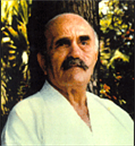 Imi Lichtenfeld (Hebrew: Imi Sde-Or) was born on 26 May 1910 in Budapest and grew up in Bratislava, the capital of Slovakia. In 1928 he became the national junior wrestling champion, and in 1929 the senior champion in two weight categories. A well-rounded athlete, he won the national boxing championship and an international gymnastics competition in the same year. Over the next ten years he focused on wrestling — both as a competitor and a coach.
In the mid-1930s, conditions began to deteriorate in Bratislava, and Imi joined a group dedicated to protecting Jewish neighbourhoods from the antisemitic attacks that had multiplied across Europe. In 1940, having become a thorn in the side of the antisemitic authorities, Imi Lichtenfeld fled occupied Europe aboard a boat called the Pentcho — the last vessel to sail the Danube and Black Sea carrying refugees who escaped the Nazis. He served for two years in the Czech Legion under British command in North Africa and the Middle East, before receiving permission to enter Palestine.
With the establishment of the State of Israel (1948), Imi Lichtenfeld was appointed Chief Instructor of Physical Education and Krav Maga in the Israeli Defense Forces (IDF). Because military service in Israel was (and still is) compulsory for both men and women, Imi developed a hand-to-hand combat system that was independent of body size and weight, applicable to both sexes. In this context, the emphasis for military personnel was on rapid learning and subsequent use of the techniques without regular intensive training.
After completing his military service, from the mid-1960s onwards, Imi Lichtenfeld worked on adapting his system to civilian needs. His pragmatic approach and the practical testing of all techniques strongly influenced the system, and Imi continued developing and refining Krav Maga until his final years.
Imi Lichtenfeld died on 9 January 1998, aged 87.